Tampilkan postingan dengan label Wildlife. Tampilkan semua postingan
Tampilkan postingan dengan label Wildlife. Tampilkan semua postingan
Jumat, 06 Mei 2016
Video: Whale Encounters Don't Come Any Closer Than This!
We've seen some interesting whale encounters captured on video over the years, but none of them are as close as this one. A feeding humpback wandered into Knudson Cove in Ketchikan, Alaska and when it breached it was right inside the harbor. It isn't often that you see a whale this closely, let alone capture it on video. Wow!

Rabu, 04 Mei 2016
Video: The Wild Galapagos Islands
The Galapagos Islands rank amongst the top travel destinations in the world, and watching this clip its easy to understand why. The unique creatures found there are a big enough draw on their own, but the beautiful waters that surround the islands are enticing too. Enjoy!
Wild Galápagos from GALAXIID on Vimeo.
Senin, 02 Mei 2016
Video: Photographing the Wolves of Yellowstone National Park
The May issue of National Geographic magazine is dedicated completely to the world's first national park – Yellowstone. When preparing to release the issue Nat Geo sent a team of photographers to the park to capture the landscapes and wildlife that exist there. Amongst them was Ronan Donovan who was charged with shooting photos of the wolves that live there. In this video, he talks about the challenges and rewards of that assignment, which was unlike any other he'd had before.
Kamis, 28 April 2016
Video: Meet Nat Geo Wildlife Photographer Joe Riis
Joe Riis has one of those jobs we all dream of. He is a wildlife photographer for National Geographic an occupation that takes him to wild and remote places all over the world. In this video, we learn more about Joe and his job, but also discover that even when you lead an adventurous life, there are still plenty of challenges to finding happiness and contentment. This is a clip you shouldn't miss. Particularly if you're looking to lead a more fulfilling life.
Joe from Andy Maser on Vimeo.
Rabu, 20 April 2016
Video: The Wildlife of Chernobyl
It has been 30 years since the nuclear disaster at Chernobyl in the Ukraine. Since than, the city, and the surrounding area, has been mostly deserted of people, but wildlife has returned to the area and is thriving. In this video from National Geographic, we get a glimpse of those creatures that include wolves, foxes, dogs, and other animals. It is fascinating to see them wandering through a place where humans continue to shun. As is usual, nature finds a way.
Selasa, 12 April 2016
Video: Experience Kenya From the Air
I love Africa, and thanks to this video I'm reminded why. It is a beautiful, amazing place that once it gets into your heart, it is impossible to shake. Here, we take a tour of Kenya using drone footage to explore the landscapes, people, and wildlife of East Africa. It is a wonderful look at a destination that every adventure traveler should see. The diversity of things to do there is astounding, as you'll see in this 4+ minute clip.
Kenya from the Air from Matador Network on Vimeo.
Senin, 11 April 2016
Video: Nat Geo Photographer Captures the Wildlife of the Arctic
Think the Arctic is lifeless? Think again. In this video, we travel north with National Geographic photographer Vincent Munier, who visits the frozen landscapes of our planet to shoot the amazing wildlife that is found there. He captures great photos of wolves, foxes, arctic hares, owls, and of course polar bears. Munier has compiled many of these images in his book Arctique.
World's Tiger Population on the Rise for First Time in 100 Years
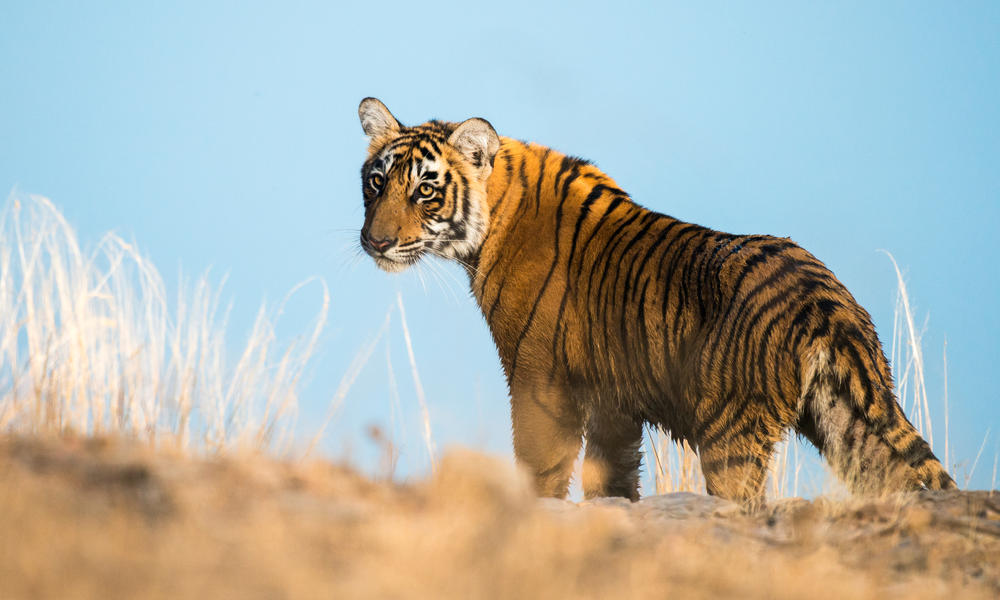
According to a new report from the World Wildlife Fund, there are now 3890 tigers worldwide, up from 3200 in 2010. Most of those gains are due to improved census processes and better protected areas in Russia, India, Nepal, and Bhutan. Further efforts are also underway in Malaysia, China, Indonesia, and Myanmar as well, but it is more difficult to estimate the number of tigers in those countries due to no formal conservation programs existing there.
The report goes on to say that two-thirds of the world's tigers live in India, where the numbers have gone up from 1706 to 2226 over the past five years. Those gains have come in the form of anti-poaching efforts as well as offering compensation to farmers and villagers who have suffered loss due to tiger attacks.
This is all good news for the big cat population, and it is encouraging for conservation efforts all over the world. There was a time when it seemed that the tiger might vanish from the wild on our planet, and while the species isn't completely out of the woods yet, these numbers are very encouraging. If this trend continues – and there is no reason to suspect it won't – we may be able to pull the tiger back from the threat of extinction. That is great news indeed.
Jumat, 08 April 2016
Video: Animal Migrations in Yellowstone National Park
As if you needed further proof that Yellowstone National Park is a truly special place, National Geographic has released a fantastic video that not only shows us the amazing animal migrations that take place in the park each year, but also the breathtaking landscapes that exist within the park as well. I've been fortunate enough to travel all over the world, and Yellowstone remains one of my favorite places. This video will help you understand why.
Kamis, 07 April 2016
Video: Yellowstone's Bear Bathtub
Yellowstone National Park has an amazing natural pool of water that seems to be a favorite with the local bear population. So much so that the pool has been dubbed the "bear bathtub." National Geographic stationed a camera trap near the pool and managed to capture some fantastic video of the bears enjoying some time in the tub. It's difficult not to smile while watching them frolic in the water. Sit back and enjoy this one.
Rabu, 06 April 2016
Rare Sumatran Rhino Dies Days After Being Found

Back in March, it was revealed that a rare, and highly endangered, species of rhino was discovered in the wilds of Sumatra. Those creatures were believed to be totally extinct, as none have been spotted there in more than 40 years. In order to protect the animal, she was captured in a pit trap and taken to a sanctuary where it was believed that she would be well protected from poachers.
But over the past few days, the rhino – who was named Najaq – saw a down turn in her health as she struggled to fight off an infection. On Tuesday, it was announced that she lost the fight, and passed away due to complications from the infection. There is a pending investigation to learn more about the situation, but it is believed that Najaq suffered an injury from a snare set by poachers prior to her being discovered. Wounds from that injury grew infected, leading to the death of the rhino.
This is obviously sad news. A few weeks ago the discovery of this creature brought hope that perhaps the species could be brought back from the brink of extinction, but this is a setback that makes those efforts even more difficult. Najaq does give us hope however that there are rhinos still out there in the wilds of Sumatra just waiting to be discovered. Hopefully conservationists find them before the poachers do.
Jumat, 25 Maret 2016
Rhino Thought to be Extinct in the Wild Found After 40 Years
The female rhino is said to be about four or five years old, and she was reportedly safely captured in a pit trap on March 12. She is now being held in a safe enclosure until she can be transported to a safe sanctuary in Indonesia.
It is believed that fewer than 100 Sumatran rhinos still exist in the wild, all of them on the island of Sumatra. The rhinos that existed in Kalimantan were declared extinct last year, although now there is hope that a few may yet wander the jungles there.
As with rhinos in Africa, the Sumatran rhino has faced serious threats from poaching, but also encroachments on their territory from miners, loggers, and farmers as well. These challenges have made the species one of the rarest on Earth.
In the same press release, the WWF also announced that three new calves have joined the breeding herd of Javan rhinos in Ujung Kulon National Park. That rhino population was down to just 60 animals worldwide as of September, 2015. But now, another three rhinos have been born as the slow process of reviving that species continues as well.
Hopefully these positive gains to these rhino species will continue.
Langganan:
Postingan (Atom)