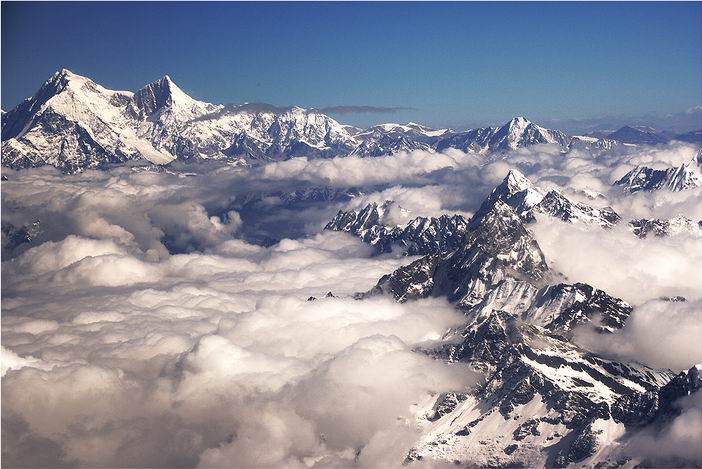
There isn't a lot of news to report from the Himalaya today as most of the teams are holding in place and watching the weather closely. But as the season continues to evolve we're now starting to get a clearer sense of how the final weeks will unfold, and an idea of when we can expect summit bids to start on Everest.
At the moment, the majority of climbing teams on the South Side of Everest are in Base Camp, or headed that direction. For most, the acclimatization efforts are now wrapped up, and they've gone back to BC to rest and wait for a few things to fall into place. Those variables include getting the ropes fixed to the summit and waiting for a proper weather window, both of which are out of their control.
The hope was that the rope fixing duties would have wrapped up by today, but avalanches and unstable conditions above the Yellow Band have slowed progress some. The Sherpa team is now predicting that they'll have the lines in place all the way to the summit by Tuesday, May 10. After that, the teams will just wait for a few days of good weather to launch their summit bids. And since calm weather traditionally arrives right around May 15 each year, we can expect climbers to potentially be on the move at the end of next week.
Meanwhile, on the North Side in Tibet, the rope fixing duties were expected to wrap up yesterday. That means the teams are now clear to go to the summit when the weather window allows, although most of them are still wrapping up their final acclimatization rotations and are resting as well. That means they could end up being on a similar schedule as the South Side teams, which is fairly common as well.
This is a similar story on several other peaks throughout the Himalaya right now. Logistical operations are starting to wrap up and it is now the weather that will dictate the schedule. But at the moment, it looks like things will remain calm into the early part of next week. After that, it will be a very busy and active time in the mountains. For now though, we all wait.
On a final note, Welsh climber Richard Parks has been forced to end his Everest expedition for the season. Parks, who has summited the mountain in the past, had been taking part in a medical research project. The plan was to take blood samples at the summit with the hopes of understanding the impact of altitude on the body. While in Camp 2 yesterday he was diagnosed with an undisclosed medical condition, and was forced to go back down. He is now preparing to head back to Kathmandu and return home.
Tampilkan postingan dengan label Mountaineering. Tampilkan semua postingan
Jumat, 06 Mei 2016
Kamis, 05 Mei 2016
Video: What Does Frostbite Do To Your Body?
Frostbite has long been the bane of mountaineers and explorers. But what exactly is frostbite, and how does it effect your body? This video from Discovery News helps to explain it, helping us to understand exactly what extreme cold can do to you.
Himalaya Spring 2016: North Side Route on Everest Could Open Today
As the spring climbing season on Everest continues we could reach a major milestone on the North Side of the mountain today, while on the South teams continue to wait and watch the weather forecasts. Summits pushes are still at least a week from getting underway, but we're nearing the endgame of a season that had to bring some sense of normalcy to the mountain, and so far it has done just that.
So far this year we haven't had a lot of news from the North Side of Everest in Tibet. That's mostly because there are fewer climbers there, and things have just been moving along about as smoothly as possible. The teams have been making regular acclimatization rotations, and for the most part there hasn't been any drama to speak of. Now, we get word that the ropes to the summit could be in place as early as today. On that side of Everest, the China-Tibet Mountaineering Association handles all of the installation of the ropes rather than the teams themselves, and according to their latest updates they say that they "hope to go to the summit on the 5th." Meaning that if all goes as expected, the work will be wrapped up today and the route to the summit will be complete.
With the summit open, the North Side teams will start to look at their schedules and weather forecasts to determine the best time to start a summit bid. Some of those teams are now wrapping up their acclimatization process, so they'll return to Base Camp to rest and regain their strength before starting up. But it won't be long now before they start thinking about the final push.
Meanwhile, on the South Side, the rope fixing efforts have reportedly stalled out after reaching 7900 meters (25,918 ft). Minor avalanches along the Lhotse Face have kept the team that handles those duties from going higher. The teams have organized the rope fixing work on the Nepali side of Everest, and it seems they had a meeting yesterday to start plan their strategy moving forward. The hope is that the weather will hold, and the avalanches will cease, in order to allow the rope-fixing Sherpas to finish the job.
The concern amongst expedition leaders on the South Side now is that the summit schedule could get backed up, or more teams will try to take advantage of a narrow weather window, causing traffic jams on summit day. But its too early to worry about that at this point, and for now the focus should be on getting the ropes in place and acclimatizing for impending summit bids.
Finally, we have no real update from Shishapangma regarding Ueli Steck and David Göttler's new route on that mountain. The duo are still in BC and waiting for a good weather window. But, there is more information on their plans. Ueli and David hope to make a direct ascent on Shisha, and then potentially make a traverse down the opposite side. The weather will dictate if that is possible, but it does give us an idea of these two talented mountaineers' plan for the days ahead.
That's all for now. More to come soon.
So far this year we haven't had a lot of news from the North Side of Everest in Tibet. That's mostly because there are fewer climbers there, and things have just been moving along about as smoothly as possible. The teams have been making regular acclimatization rotations, and for the most part there hasn't been any drama to speak of. Now, we get word that the ropes to the summit could be in place as early as today. On that side of Everest, the China-Tibet Mountaineering Association handles all of the installation of the ropes rather than the teams themselves, and according to their latest updates they say that they "hope to go to the summit on the 5th." Meaning that if all goes as expected, the work will be wrapped up today and the route to the summit will be complete.
With the summit open, the North Side teams will start to look at their schedules and weather forecasts to determine the best time to start a summit bid. Some of those teams are now wrapping up their acclimatization process, so they'll return to Base Camp to rest and regain their strength before starting up. But it won't be long now before they start thinking about the final push.
Meanwhile, on the South Side, the rope fixing efforts have reportedly stalled out after reaching 7900 meters (25,918 ft). Minor avalanches along the Lhotse Face have kept the team that handles those duties from going higher. The teams have organized the rope fixing work on the Nepali side of Everest, and it seems they had a meeting yesterday to start plan their strategy moving forward. The hope is that the weather will hold, and the avalanches will cease, in order to allow the rope-fixing Sherpas to finish the job.
The concern amongst expedition leaders on the South Side now is that the summit schedule could get backed up, or more teams will try to take advantage of a narrow weather window, causing traffic jams on summit day. But its too early to worry about that at this point, and for now the focus should be on getting the ropes in place and acclimatizing for impending summit bids.
Finally, we have no real update from Shishapangma regarding Ueli Steck and David Göttler's new route on that mountain. The duo are still in BC and waiting for a good weather window. But, there is more information on their plans. Ueli and David hope to make a direct ascent on Shisha, and then potentially make a traverse down the opposite side. The weather will dictate if that is possible, but it does give us an idea of these two talented mountaineers' plan for the days ahead.
That's all for now. More to come soon.
Rabu, 04 Mei 2016
Himalaya Spring 2016: Summit Bid Launched on Manaslu, Fixed Ropes Update on Everest
The news from the Himalaya just keeps coming this spring as more teams continue to acclimatize on Everest and two climbers prepare for a difficult summit bid on Manaslu. Others are now waiting and watching the weather, hoping for a chance to launch attempts of their own.
We'll start with an update from Manaslu, where Peter Hamor and Horia Colibasanu have reportedly announced that they are leaving Base Camp today to start their summit bid on the 8163 meter (26,781 ft) mountain. The two men will now attempt to reach the top using the standard route, but will help complete their acclimatization prior to attempting a new route without the use of supplemental oxygen. The weather is said to be calm at the moment, and if everything goes according to plan, they should top out this weekend. After that, they'll drop back to BC for a rest before starting their second attempt later in the month.
Over on Everest, more teams, including the Adventure Consultants, have now reached Camp 3 as they continue to acclimatize ahead of eventual summit bids in just a couple of weeks time. Most of the climbers are now descending back to BC for a rest as they wait for Camp 4 to be full established and the fixed ropes to be installed. That process is proceeding, and reports indicate that the lines now reach above the Yellow Band, but bad weather higher on the mountain have stalled due to strong winds at higher altitudes.
Ueli Steck and David Göttler continue to wait for a proper weather window on Shishapangma. The two men have announced that their acclimatization process is done and they are simply waiting for the right time to start the climb. That could happen this weekend as well, although the two talented climbers are prepared to wait as long as necessary before starting their alpine style ascent along a new route.
Finally, there is news from Annapurna as well, were all of the 30 summiteers from this past weekend are now safely back in Base Camp, with most preparing to go home. While they were wrapping up their expeditions over the past few days, a group of 75 local villagers paid a visit to BC. They had just completed construction of a new trail that will cut down the time it takes to trek to the mountain, allowing climbers to get there in as little as three days. That should open up the region to more visitors and bring down the costs for trekking and climbing on Annapurna as well.
We'll start with an update from Manaslu, where Peter Hamor and Horia Colibasanu have reportedly announced that they are leaving Base Camp today to start their summit bid on the 8163 meter (26,781 ft) mountain. The two men will now attempt to reach the top using the standard route, but will help complete their acclimatization prior to attempting a new route without the use of supplemental oxygen. The weather is said to be calm at the moment, and if everything goes according to plan, they should top out this weekend. After that, they'll drop back to BC for a rest before starting their second attempt later in the month.
Over on Everest, more teams, including the Adventure Consultants, have now reached Camp 3 as they continue to acclimatize ahead of eventual summit bids in just a couple of weeks time. Most of the climbers are now descending back to BC for a rest as they wait for Camp 4 to be full established and the fixed ropes to be installed. That process is proceeding, and reports indicate that the lines now reach above the Yellow Band, but bad weather higher on the mountain have stalled due to strong winds at higher altitudes.
Ueli Steck and David Göttler continue to wait for a proper weather window on Shishapangma. The two men have announced that their acclimatization process is done and they are simply waiting for the right time to start the climb. That could happen this weekend as well, although the two talented climbers are prepared to wait as long as necessary before starting their alpine style ascent along a new route.
Finally, there is news from Annapurna as well, were all of the 30 summiteers from this past weekend are now safely back in Base Camp, with most preparing to go home. While they were wrapping up their expeditions over the past few days, a group of 75 local villagers paid a visit to BC. They had just completed construction of a new trail that will cut down the time it takes to trek to the mountain, allowing climbers to get there in as little as three days. That should open up the region to more visitors and bring down the costs for trekking and climbing on Annapurna as well.
Selasa, 03 Mei 2016
Video: The Amazing Story of Alex Lowe and Conrad Anker
The discovery of the remains of Alex Lowe and David Bridges on Shishapangma has made headlines across the mountaineering community and beyond. That revelation has brought to the forefront Alex's friendship with Conrad Anker, and they way the loss of his friend changed Anker's life forever. This video from Outside TV provides the background on that story which remains extraordinarily touching even for those of us who already know it.
Men's Journal Gives Us a Three-Year Plan for Climbing Everest
For a lot of people, climbing Mt. Everest is the dream of a lifetime. But thinking about everything that goes into preparing and planning for such an expedition can be overwhelming. Fortunately, Men's Journal is here to help, giving us a three-year plan to making Everest not just a dream, but a reality.
MJ's article was actually written back in 2014, with the plan of reaching the summit of Everest in the spring of 2017. But, if you ignore the precise dates, and focus just on the plan itself, the schedule can remain the same. And fortunately for all of us, the training starts in May.
The first stage of the Everest prep plan is to start getting into shape. The article says that you should start getting ready by building a strong fitness base of cardio, strength, and balance. Over the course of the three year program, that will be the focus of getting your body ready for the challenges of the Himalaya.
Next up, you'll also need to start seeing how your body does at altitude, so the plan is to bag a 14er, or a fourteen-thousand foot peak. This will not only allow you to put your fitness gains to the test, it'll let you build leg strength and lung capacity. With its 53 different 14ers, Colorado is a natural destination to bag one of these mountains, but there are plenty of others around as well.
The rest of the plan includes pushing your physical boundaries even higher by attempting more challenging peaks (Mt. Rainier for instance) and adding altitude. The Men's Journal schedule recommends traveling to Ecuador to climb Cotopaxi to get a taste for altitudes above 19,000 feet, although Tanzania's Kilimanjaro will do too. From there, it's on to Denali in Alaska – described as a "mini-Everest" – before attempting an easier 8000-meter peak like Cho Oyu. After that, Everest will be in reach.
In terms of creating a strategy for getting yourself ready to climb the Big Hill, this is about as good of a plan as any. You could literally go from zero mountaineering experience, to Everest in just three years if you stick to the schedule closely. What it doesn't offer is advice on how to pay for it all. Mountaineering expeditions aren't cheap, and even travel to and from these locations can be pricey. For most of us, that would turn this three year plan into one that would probably take a decade or more to wrap up.
MJ's article was actually written back in 2014, with the plan of reaching the summit of Everest in the spring of 2017. But, if you ignore the precise dates, and focus just on the plan itself, the schedule can remain the same. And fortunately for all of us, the training starts in May.
The first stage of the Everest prep plan is to start getting into shape. The article says that you should start getting ready by building a strong fitness base of cardio, strength, and balance. Over the course of the three year program, that will be the focus of getting your body ready for the challenges of the Himalaya.
Next up, you'll also need to start seeing how your body does at altitude, so the plan is to bag a 14er, or a fourteen-thousand foot peak. This will not only allow you to put your fitness gains to the test, it'll let you build leg strength and lung capacity. With its 53 different 14ers, Colorado is a natural destination to bag one of these mountains, but there are plenty of others around as well.
The rest of the plan includes pushing your physical boundaries even higher by attempting more challenging peaks (Mt. Rainier for instance) and adding altitude. The Men's Journal schedule recommends traveling to Ecuador to climb Cotopaxi to get a taste for altitudes above 19,000 feet, although Tanzania's Kilimanjaro will do too. From there, it's on to Denali in Alaska – described as a "mini-Everest" – before attempting an easier 8000-meter peak like Cho Oyu. After that, Everest will be in reach.
In terms of creating a strategy for getting yourself ready to climb the Big Hill, this is about as good of a plan as any. You could literally go from zero mountaineering experience, to Everest in just three years if you stick to the schedule closely. What it doesn't offer is advice on how to pay for it all. Mountaineering expeditions aren't cheap, and even travel to and from these locations can be pricey. For most of us, that would turn this three year plan into one that would probably take a decade or more to wrap up.
Himalaya Spring 2016: 5 Questions for Ueli Steck and David Göttler
One of the most interesting expeditions that is currently taking place in the Himalaya is Ueli Steck and David Göttler's attempt to summit Shishapangma along a new route. The two men made headlines over the weekend when they discovered the remains of Alex Lowe and David Bridges along the route they plan to ascend, but for those of us who have been watching their progress, there was other important news, namely that they have now completed their acclimatization and are simply waiting for a weather window before they begin their fast, alpine style ascent. Before that happens, German journalist Stefan Nestler has sent five questions to the dynamic duo as they wait in Base Camp, and their answers are very interesting indeed.
As usual, I won't spoil all of the questions and answers, but just tell you that Stefan asks some of the things we've all been wondering about, like which one of the two men is the most fit and the fastest. Both Ueli and David are known for being fleet of foot in the mountains, and they say that they are simply enjoying climbing with one another since they know the other is capable of staying with them throughout the expedition.
Stefan also asks them about their unusual acclimatization process (trail running in the Khumbu Valley), the current conditions on the mountain, details on the route they intend to climb, and about their experience in the region one year after the Nepali earthquake. As you can imagine, they have some good things to share on all of these topics. Of course, they are also eager to get started on the actual ascent, which hopefully can happen starting later this week.
Elsewhere, teams on Everest are now starting to retreat back to BC after rotations up to Camp 3 for a round of acclimatization. Despite the fact that there have been a lot of reports of avalanches on the mountain in recent days, it should be noted that there have been no injuries and the route has been repaired where ever these ice slides have occurred. In other words, the season is progressing about as smoothly and normally as it has in the past five years, with teams going about their business quickly and efficiently. If all goes according to plan, they should be ready to make summit bids – weather permitting – sometime around the middle of the month.
That's all for today. More news from the Himalaya as we get it.
As usual, I won't spoil all of the questions and answers, but just tell you that Stefan asks some of the things we've all been wondering about, like which one of the two men is the most fit and the fastest. Both Ueli and David are known for being fleet of foot in the mountains, and they say that they are simply enjoying climbing with one another since they know the other is capable of staying with them throughout the expedition.
Stefan also asks them about their unusual acclimatization process (trail running in the Khumbu Valley), the current conditions on the mountain, details on the route they intend to climb, and about their experience in the region one year after the Nepali earthquake. As you can imagine, they have some good things to share on all of these topics. Of course, they are also eager to get started on the actual ascent, which hopefully can happen starting later this week.
Elsewhere, teams on Everest are now starting to retreat back to BC after rotations up to Camp 3 for a round of acclimatization. Despite the fact that there have been a lot of reports of avalanches on the mountain in recent days, it should be noted that there have been no injuries and the route has been repaired where ever these ice slides have occurred. In other words, the season is progressing about as smoothly and normally as it has in the past five years, with teams going about their business quickly and efficiently. If all goes according to plan, they should be ready to make summit bids – weather permitting – sometime around the middle of the month.
That's all for today. More news from the Himalaya as we get it.
Senin, 02 Mei 2016
Himalaya Spring 2016: Summits on Annapurna, Avalanches on Everest, and More
On top of the big news of the discovery of the remains of Alex Lowe and David Bridges on Shishapangma that broke this past weekend, there is quite a few other updates to share from the Himalaya today too. And with May now upon us, the season is rapidly slipping by with potential summit bids now just a few weeks away.
Over on Annapurna this weekend it was already summit day for a number of climbers. The first teams topped out on Saturday, with others following suit on Sunday. The weather was reportedly quite good, with low winds and great conditions on the summit. This followed days of less than ideal weather which had kept the climbers stuck in Base Camp, but once the forecast improved, they were on the move quickly, going from BC to Camp 4 over the course of two or three days. That put them in a position to top out over the weekend, with a good weather window holding long enough for everyone to get up and down safely.
All told, 30 climbers managed to reach the summit of Annapurna this past weekend, with 16 of those mountaineers being Nepali Sherpas. Amongst the foreign climbers were Aussie Chris Jensen Burke and Spaniard Carlos Soria, whom we've been following on expeditions for several years. For Soria, this was his 12th 8000-meter peak, and at the age of 77 he is now the oldest to ever summit the mountain.
Elsewhere on Everest the teams are back on schedule following the avalanche that took place last week, temporarily closing the Lhotse Face. Late last week there was also an ice collapse in the Khumbu Icefall which shut down operations through that crucial part of the ascent as well, but the Ice Doctors quickly fixed the route and had teams back on track once again. In fact, a number of teams have now spent time in Camp 3 and are back in BC following their rotation at altitude.
If the weather holds – and the forecasts look good at the moment – the Sherpa team that is charged with fixing ropes to the summit hopes to complete their work by the end of the week. If that happens, we should be on track to begin summit bids by May 15, weather permitting of course.
Alan Arnette has updated readers on his progress on Lhotse, and sadly his expedition has come to an end. You may recall that last week Alan shared the news that he was forced to turn back while climbing in the Khumbu Icefall due to a cough that was a sign of an upper respiratory infection. That cough turned into something worse a few days later when he made an acclimatization rotation up to Camp 2. In fact, the infection became dangerous and debilitating to the point that he had to be flown off the mountain from C2 by helicopter. He's now back in Kathmandu, starting his recovery, and preparing to head home.
Finally, over on Shishpangma, Ueli Steck and David Göttler are now preparing to make their summit push along a new route. The duo announced that their acclimatization process is complete, they've scouted the route thoroughly, and they are now ready to get going. They're simply waiting for the proper weather window to launch their bid, which could come as early as this week.
As you can see, things are really heating up at the moment with lots of activity taking place. We'll probably see it quiet down briefly as teams return to their Base Camps, rest up, and start watching the weather. The season is moving along at a steady pace, and things are going about as well as can be expected. So far, it has been a nice change of pace over the past couple of years, as it looks like things are getting back to "normal" on Everest.
Over on Annapurna this weekend it was already summit day for a number of climbers. The first teams topped out on Saturday, with others following suit on Sunday. The weather was reportedly quite good, with low winds and great conditions on the summit. This followed days of less than ideal weather which had kept the climbers stuck in Base Camp, but once the forecast improved, they were on the move quickly, going from BC to Camp 4 over the course of two or three days. That put them in a position to top out over the weekend, with a good weather window holding long enough for everyone to get up and down safely.
All told, 30 climbers managed to reach the summit of Annapurna this past weekend, with 16 of those mountaineers being Nepali Sherpas. Amongst the foreign climbers were Aussie Chris Jensen Burke and Spaniard Carlos Soria, whom we've been following on expeditions for several years. For Soria, this was his 12th 8000-meter peak, and at the age of 77 he is now the oldest to ever summit the mountain.
Elsewhere on Everest the teams are back on schedule following the avalanche that took place last week, temporarily closing the Lhotse Face. Late last week there was also an ice collapse in the Khumbu Icefall which shut down operations through that crucial part of the ascent as well, but the Ice Doctors quickly fixed the route and had teams back on track once again. In fact, a number of teams have now spent time in Camp 3 and are back in BC following their rotation at altitude.
If the weather holds – and the forecasts look good at the moment – the Sherpa team that is charged with fixing ropes to the summit hopes to complete their work by the end of the week. If that happens, we should be on track to begin summit bids by May 15, weather permitting of course.
Alan Arnette has updated readers on his progress on Lhotse, and sadly his expedition has come to an end. You may recall that last week Alan shared the news that he was forced to turn back while climbing in the Khumbu Icefall due to a cough that was a sign of an upper respiratory infection. That cough turned into something worse a few days later when he made an acclimatization rotation up to Camp 2. In fact, the infection became dangerous and debilitating to the point that he had to be flown off the mountain from C2 by helicopter. He's now back in Kathmandu, starting his recovery, and preparing to head home.
Finally, over on Shishpangma, Ueli Steck and David Göttler are now preparing to make their summit push along a new route. The duo announced that their acclimatization process is complete, they've scouted the route thoroughly, and they are now ready to get going. They're simply waiting for the proper weather window to launch their bid, which could come as early as this week.
As you can see, things are really heating up at the moment with lots of activity taking place. We'll probably see it quiet down briefly as teams return to their Base Camps, rest up, and start watching the weather. The season is moving along at a steady pace, and things are going about as well as can be expected. So far, it has been a nice change of pace over the past couple of years, as it looks like things are getting back to "normal" on Everest.
The Remains of Alex Lowe and David Bridges Found on Shishapangma
There is a lot of news to report from the Himalaya over this past weekend, but I felt this story warranted its own post. One of the big stories to break over the past few days is that the remains of climbers Alex Lowe and David Bridges were discovered on Shishapangma more than 16 years after they went missing there.
Back in October of 1999, Lowe and Bridges – along with Conrad Anker – were part of an expedition to the 8027 meter (26,335 ft) mountain. The three men were scouting their route in anticipation of their ascent when an avalanche struck, sweeping Alex and David away in the process. Anker survived and was joined by other members of the team, who swept the face of the mountain for signs of their fallen comrades. They didn't find a trace of them.
Those of you familiar with this story know what happened next. Anker returned home, grieving for the loss of Lowe who was his best friend. He sought solace with Alex's widow Jenni, and the two eventually married with Conrad becoming the step father to the couple's son. In the years that have followed, Anker has gone on to be one of the most accomplished alpinists of his generation.
Last week, Ueli Steck and David Göttler were scouting a new route on Shishapangma in preparation of an alpine style ascent this spring. The two men – who are also highly accomplished climbers - discovered the remains of Lowe and Bridges, who was a talented cameraman sent to film the 1999 expedition.
The bodies of the two men were revealed as climate change has started to cause melting on Shishapangma. And while they haven't been conclusively identified as of yet, the gear from the era that they went missing, and the location of the bodies on the mountain, all point to bodies being Alex and David.
The discovery does bring a measure of closure to the families of the two climbers who are no doubt grieving again with revelation of the remains of Alex and David being uncovered. Our thoughts are with those who were close to the two men. Hopefully this discovery helps them to find a further measure of peace.
Back in October of 1999, Lowe and Bridges – along with Conrad Anker – were part of an expedition to the 8027 meter (26,335 ft) mountain. The three men were scouting their route in anticipation of their ascent when an avalanche struck, sweeping Alex and David away in the process. Anker survived and was joined by other members of the team, who swept the face of the mountain for signs of their fallen comrades. They didn't find a trace of them.
Those of you familiar with this story know what happened next. Anker returned home, grieving for the loss of Lowe who was his best friend. He sought solace with Alex's widow Jenni, and the two eventually married with Conrad becoming the step father to the couple's son. In the years that have followed, Anker has gone on to be one of the most accomplished alpinists of his generation.
Last week, Ueli Steck and David Göttler were scouting a new route on Shishapangma in preparation of an alpine style ascent this spring. The two men – who are also highly accomplished climbers - discovered the remains of Lowe and Bridges, who was a talented cameraman sent to film the 1999 expedition.
The bodies of the two men were revealed as climate change has started to cause melting on Shishapangma. And while they haven't been conclusively identified as of yet, the gear from the era that they went missing, and the location of the bodies on the mountain, all point to bodies being Alex and David.
The discovery does bring a measure of closure to the families of the two climbers who are no doubt grieving again with revelation of the remains of Alex and David being uncovered. Our thoughts are with those who were close to the two men. Hopefully this discovery helps them to find a further measure of peace.
Jumat, 29 April 2016
Video: For the Love of the Climb
In this video, mountaineers Cory Richards and Mark Jenkins share their passion for climbing in the big mountains and what drives them to take sometimes extreme risks in the high places of our planet. It is an insightful look at why alpinists do the things they do, offering some explanation of what the mountains mean to them. For those who don't understand the mountaineering culture, this might provide a bit of an explanation.
Himalaya Spring 2016: Annapurna Summit Push is On, Progress Elsewhere
It is safe to say that the spring climbing season in the Himalaya is now in full swing, with teams now focused on acclimatization and preparation for eventual summit bids. For the most part, it has been a relatively quiet season so far, which is a welcome change from the past few years when we've seen everything from brawls on Everest to tragic deaths to serious disagreements between climbers. But so far this year, there has been a sense of calm pervading the entire region, which could lead to a very successful return to form.
We'll start today's update with news from Annapurna, where several teams are now on the move with the hope of topping out over the next few days. The plan is to reach Camp 4 tomorrow, spend a brief time resting there, and then launching the final push to the top. At the moment, the weather looks like it will be good, with winds dying off as they climb higher. If everything goes according to plan, they should complete the ascent on Sunday, May 1, most likely ending the season on Annapurna for the year.
Over on Everest, a ladder was expected to be installed along the route up the Lhotse Face that was closed yesterday due to an ice collapse. That ladder will help the teams overcome this new obstacle in a safe fashion and allow them to continue on to Camp 3 as part of their acclimatization efforts. We're also told that the Sherpa team that is fixing ropes up the mountain is progressing nicely, and should finish their work all the way to the summit in the first week of May. After that, it'll just be a matter of when the teams are properly prepared for the altitude and a weather window opens to the summit. Most likely that will occur around the middle of May.
On the Northside of Everest things are progressing as well, although at a bit slower pace. The Chinese-Tibetan team has started installing the ropes there and have now reached 7000 meters (22,965 ft), and by all accounts Base Camp is quiet, well maintained, and orderly. Teams are acclimatizing there as well, with the process continuing on schedule.
Meanwhile, progress is being made on other mountains in the Himalaya as well. ExWeb is reporting that Sherpas have now established C1 on Dhaulagiri and are pressing forward with installing the ropes up to C2 as well. On Shishapangma, Ueli Steck and David Göttler are waiting out some high winds before proceeding upwards, but everything looks good at there at the moment. On Cho Oyu, teams are still arriving and getting settled, but one group has already reached Camp 2 at 7000 meters (22,965 ft), while on Makalu, the route up Makalu La has been installed up to C2 as well.
Things aren't going quite as smoothly on Manaslu, where heavy snows are keeping teams grounded for now. Above Camp 1 – located at 5800 meters (19,028 ft) – the snow is said to be more than a meter and a half deep, and still falling. That has kept all climbers from going much higher than C1, which has hampered their efforts to acclimatize. As you can imagine, all of the teams are watching the forecasts closely, and working out plans to break trail to C2 and higher.
We're in the part of the climbing season that is a bit of a grind for the teams. They still have lots of work to do before any eventual summit pushes, and there are lots of challenges to overcome before that happens. Still, things are going according to the plan for the most part, with progress being made across the region. In a few weeks time, we'll be reporting on serious summit pushes during a season that needs to come off safely and without controversy.
Kamis, 28 April 2016
Himalaya Spring 2016: Lhotse Face Closed on Everest, Annapurna Summit Push Begins
More news from the Himalaya today where the spring climbing season continues to unfold at a quick pace. But today we learn that acclimatization efforts are at a standstill on Everest, while teams on Annapurna are once again on the move.
The big news of the day is that the Lhotse Face on Everest is closed due to the collapse of an ice ledge on the mountain. The collapse occurred along the route from Camp 2 to Camp 3, where some teams were already moving up as part of their latest round of acclimatization rotations. All teams have reportedly retreated to C2, where everyone seems to be safe. Thankfully, there doesn't appear to be any casualties.
The collapse occurred this morning local time in Nepal. The teams there are now examining their options for climbing higher, which could involve using ladders to climb over the chunks of ice or a longer route that goes around the area where the collapse occurred. It will probably take a couple of days to sort things out, as ladders would need to be carried up the mountain to be put into place or any potential detours will need to be scouted before teams attempt to go around.
In other Everest news, it has also been reported that a Sherpa collapsed in Camp 1 today. He was immediately treated for altitude sickness, placed on oxygen, and evacuated to Lukla. Now that he is at lower altitude, he is expected to recover completely.
Elsewhere, over on Annapurna a new summit bid is now under way. Teams have started to move up this morning with the hope of topping out on Sunday, May 1. About 30 climbers, including 10 Sherpas, have begun to move up, with Aussie Chris Jensen Burke and Spaniard Carlos Soria amongst the group. If all goes according to plan, they should reach C4 by Saturday and launch their bid that evening with the plan of summiting on Sunday morning. Hopefully the weather will hold, allowing them to safely get up and down.
That's all for now. More news as it comes in.
The big news of the day is that the Lhotse Face on Everest is closed due to the collapse of an ice ledge on the mountain. The collapse occurred along the route from Camp 2 to Camp 3, where some teams were already moving up as part of their latest round of acclimatization rotations. All teams have reportedly retreated to C2, where everyone seems to be safe. Thankfully, there doesn't appear to be any casualties.
The collapse occurred this morning local time in Nepal. The teams there are now examining their options for climbing higher, which could involve using ladders to climb over the chunks of ice or a longer route that goes around the area where the collapse occurred. It will probably take a couple of days to sort things out, as ladders would need to be carried up the mountain to be put into place or any potential detours will need to be scouted before teams attempt to go around.
In other Everest news, it has also been reported that a Sherpa collapsed in Camp 1 today. He was immediately treated for altitude sickness, placed on oxygen, and evacuated to Lukla. Now that he is at lower altitude, he is expected to recover completely.
Elsewhere, over on Annapurna a new summit bid is now under way. Teams have started to move up this morning with the hope of topping out on Sunday, May 1. About 30 climbers, including 10 Sherpas, have begun to move up, with Aussie Chris Jensen Burke and Spaniard Carlos Soria amongst the group. If all goes according to plan, they should reach C4 by Saturday and launch their bid that evening with the plan of summiting on Sunday morning. Hopefully the weather will hold, allowing them to safely get up and down.
That's all for now. More news as it comes in.
Rabu, 27 April 2016
Himalaya Spring 2016: 4 Deaths in 5 Days Cast Shadow Over the Himalaya
Despite the fact that the spring climbing season in the Himalaya seems to be proceeding about as smoothly as can be expected following the challenges of the past few years, there are still some dark clouds hanging over the big mountains. The Himalayan Times is now reporting that four foreign climbers have lost their lives in the past five days, breaking the sense of safety and serenity that has hovered over the region so far this year.
Two of the deaths came on Shishapangma, where a Swiss climber named Patrik Mattioli and an Austrian named Jon David Johnson fell from a fixed rope into a crevasse. The accident occurred on April 24 at 6200 meters (20,341 ft) as the two men were climbing up from Advanced Base Camp. They were apparently killed immediately.
Meanwhile, over on Everest, a Japanese climber named Hidenori Hagi passed away in Base Camp on the same day. He was being treated for altitude sickness at the time, but succumbed to the illness. His body was retrieved and flown back to Kathmandu.
The fourth death also occurred in the Khumbu Valley yesterday. An unnamed Korean climber died of altitude sickness while returning from Lobuche Peak. Details on the incident remain sparse, with local officials still investigating the incident, although it seems to be a simple case of HACE or HAPE claiming another life.
Altitude sickness is a common occurrence in the Himalaya. According to the Times, at least seven people were evacuated from Everest Base Camp over the past three weeks while exhibiting symptoms of the illness. Another 110 patients have been treated in EBC for HACE or HAPE as well.
The altitude sickness treatment center in Pheriche in the Khumbu Valley shared even higher numbers. They indicated that 9 people had to be evacuated from the area, while 250 have been treated for altitude sickness.
While these numbers seem high, they are generally in line with what you would expect from the spring climbing season. It is not uncommon for people to take ill at altitude, but those symptoms aren't always life threatening or dangerous. Some are quite mild, with headaches or mild nausea common. That said, a friend of mine collapsed twice above the Khumbu Icefall on Everest last week and had to be evacuated from the mountain. Had he gone much higher, the situation could have become dire, but fortunately he was able to be pulled off the mountain safely and is now home and recovering. Hopefully that will be the case for most who run into trouble.
Two of the deaths came on Shishapangma, where a Swiss climber named Patrik Mattioli and an Austrian named Jon David Johnson fell from a fixed rope into a crevasse. The accident occurred on April 24 at 6200 meters (20,341 ft) as the two men were climbing up from Advanced Base Camp. They were apparently killed immediately.
Meanwhile, over on Everest, a Japanese climber named Hidenori Hagi passed away in Base Camp on the same day. He was being treated for altitude sickness at the time, but succumbed to the illness. His body was retrieved and flown back to Kathmandu.
The fourth death also occurred in the Khumbu Valley yesterday. An unnamed Korean climber died of altitude sickness while returning from Lobuche Peak. Details on the incident remain sparse, with local officials still investigating the incident, although it seems to be a simple case of HACE or HAPE claiming another life.
Altitude sickness is a common occurrence in the Himalaya. According to the Times, at least seven people were evacuated from Everest Base Camp over the past three weeks while exhibiting symptoms of the illness. Another 110 patients have been treated in EBC for HACE or HAPE as well.
The altitude sickness treatment center in Pheriche in the Khumbu Valley shared even higher numbers. They indicated that 9 people had to be evacuated from the area, while 250 have been treated for altitude sickness.
While these numbers seem high, they are generally in line with what you would expect from the spring climbing season. It is not uncommon for people to take ill at altitude, but those symptoms aren't always life threatening or dangerous. Some are quite mild, with headaches or mild nausea common. That said, a friend of mine collapsed twice above the Khumbu Icefall on Everest last week and had to be evacuated from the mountain. Had he gone much higher, the situation could have become dire, but fortunately he was able to be pulled off the mountain safely and is now home and recovering. Hopefully that will be the case for most who run into trouble.
Selasa, 26 April 2016
Himalaya Spring 2016: News From Everest, Another Summit Window Opens on Annapurna
Yesterday was a busy – if solemn – one on Everest, as the climbing teams are now in the thick of their acclimatization process. Elsewhere, a similar story is unfolding on a number of other Himalayan peaks, while over on Annapurna the climbers are now eyeing another weather window that approaches in the next few days.
We've reached the mid-way point of the climbing season on Everest, where we get an excellent report on what is happening there via to Alan Arnette. He says that in some ways it is a very normal season on Everest this year, which is a relief considering the challenges of the past few seasons. But it is a quieter time in the Khumbu Valley as well, with about 15% fewer climbers on Everest, and about a 40% drop off in trekking across the region too. That means its fairly quiet there compared to years past.
Alan says that another major change on Everest this season is that the route through the Khumbu Icefall has been altered as well. In the past, climbers spent a lot of time in the Icefall, crossing upwards of 20 ladders as they made their way through this dangerous section of the mountain. But this year, there are just 7 ladders, as the route is shorter while avoiding some of the more dangerous overhanging seracs. The route might be more direct, but it is also more challenging too. Alan indicates that there is actually more climbing involved with passing through the Icefall this season, which is a departure from previous years as well.
As for Alan himself, he's in Nepal to climb Lhotse this season, but his acclimatization process has been slowed by an upper respiratory infection. He tells readers that his team is now on a mid-season rotation up to Camp 2 right now, but he was forced to return to Base Camp after developing a nasty cough. He's hoping to knock the illness out quickly and get back on track soon. With five weeks to go, he still has plenty of time to acclimatize ahead of an eventual summit bid.
Over on Shishapangma, Ueli Steck and David Göttler have now arrived in BC. They finished their trek to the mountain on Sunday and have spent the past couple of days getting settled and rested. The duo have traveled to the Himalaya to attempt a new route on this peak, which they hope to complete in a light and fast, alpine style ascent. They acclimatized in the Khumbu Valley before crossing the border into Tibet, and are now ready to start scouting the line that they intend to climb. It is likely that they'll spend a bit for time acclimatizing and watching the weather before they actually start their ascent.
Finally, the remaining teams on Annapurna are now gearing up for what looks like the next – and possibly final – summit bid of the season. Forecasts now indicate that the jet stream is now starting to move away from Nepal, and as a result winds are beginning to die down to a degree. It now appears that conditions could permit climbers to go for the summit this coming weekend or early next week, although the exact schedule is still in flux.
Time could be running out on Annapurna, where teams have been on the mountain for weeks already. The current strategy for this mountain – which is prone to avalanches – is to climb earlier in the season before it gets too warm there. We're approaching the point in the season when things will start to warm up, making it riskier to climb. With that in mind, most of the climbers are hoping to take advantage of the next weather window to nab the summit while they can. On top of that, a number of the alpinists are also planning on moving on to other peaks in the region, so they're eager to wrap-up their expeditions on Annapurna as well.
Things are really starting to ramp up now across the Himalaya. We're still several weeks away from summit attempts on Everest of course, but it is easy to see how things are unfolding at the moment. It's all about the acclimatization rotations and the weather right now, but things are proceeding about as well as expected at this point.
We've reached the mid-way point of the climbing season on Everest, where we get an excellent report on what is happening there via to Alan Arnette. He says that in some ways it is a very normal season on Everest this year, which is a relief considering the challenges of the past few seasons. But it is a quieter time in the Khumbu Valley as well, with about 15% fewer climbers on Everest, and about a 40% drop off in trekking across the region too. That means its fairly quiet there compared to years past.
Alan says that another major change on Everest this season is that the route through the Khumbu Icefall has been altered as well. In the past, climbers spent a lot of time in the Icefall, crossing upwards of 20 ladders as they made their way through this dangerous section of the mountain. But this year, there are just 7 ladders, as the route is shorter while avoiding some of the more dangerous overhanging seracs. The route might be more direct, but it is also more challenging too. Alan indicates that there is actually more climbing involved with passing through the Icefall this season, which is a departure from previous years as well.
As for Alan himself, he's in Nepal to climb Lhotse this season, but his acclimatization process has been slowed by an upper respiratory infection. He tells readers that his team is now on a mid-season rotation up to Camp 2 right now, but he was forced to return to Base Camp after developing a nasty cough. He's hoping to knock the illness out quickly and get back on track soon. With five weeks to go, he still has plenty of time to acclimatize ahead of an eventual summit bid.
Over on Shishapangma, Ueli Steck and David Göttler have now arrived in BC. They finished their trek to the mountain on Sunday and have spent the past couple of days getting settled and rested. The duo have traveled to the Himalaya to attempt a new route on this peak, which they hope to complete in a light and fast, alpine style ascent. They acclimatized in the Khumbu Valley before crossing the border into Tibet, and are now ready to start scouting the line that they intend to climb. It is likely that they'll spend a bit for time acclimatizing and watching the weather before they actually start their ascent.
Finally, the remaining teams on Annapurna are now gearing up for what looks like the next – and possibly final – summit bid of the season. Forecasts now indicate that the jet stream is now starting to move away from Nepal, and as a result winds are beginning to die down to a degree. It now appears that conditions could permit climbers to go for the summit this coming weekend or early next week, although the exact schedule is still in flux.
Time could be running out on Annapurna, where teams have been on the mountain for weeks already. The current strategy for this mountain – which is prone to avalanches – is to climb earlier in the season before it gets too warm there. We're approaching the point in the season when things will start to warm up, making it riskier to climb. With that in mind, most of the climbers are hoping to take advantage of the next weather window to nab the summit while they can. On top of that, a number of the alpinists are also planning on moving on to other peaks in the region, so they're eager to wrap-up their expeditions on Annapurna as well.
Things are really starting to ramp up now across the Himalaya. We're still several weeks away from summit attempts on Everest of course, but it is easy to see how things are unfolding at the moment. It's all about the acclimatization rotations and the weather right now, but things are proceeding about as well as expected at this point.
Senin, 25 April 2016
Himalaya Spring 2016: Solemn Day on Everest and Beyond
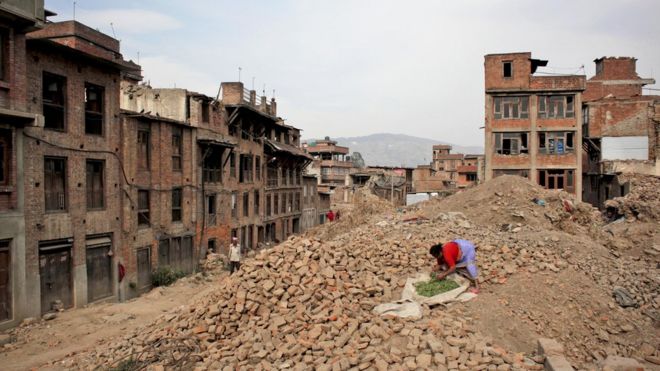
It is a solemn day in the Himalaya, as it was exactly one year today since the devastating earthquake shook Nepal, destroying thousands of buildings and claiming the lives of more than 8800 people, including 21 on Mt. Everest itself. In the weeks that followed, continued aftershocks kept the country on edge, fraying nerves and preventing the rebuilding process from fully getting underway in some areas.
Last year this time, the world was stunned to see just how widespread the destruction was, with everything from mountain villages to World Heritage sites being completely destroyed by the quake. We were horrified to read about the massive loss of life, and the mountaineering community was saddened by yet another tragedy on Everest that brought an end to the climbing season there for a second year in a row.
Now, a year later, Nepal still struggles with the rebuilding process. According to reports, while the roads are cleared and power has been restored, there has been little progress towards actually reconstructing the buildings that have collapsed. Many people still live in tent cities or temporary shelters, while the Nepali government struggles to manage the massive rebuilding effort. In the meantime, the people that live there continue to suffer.
There have been a number of ceremonies held throughout the country today to commemorate the occasion. With the wounds of the disaster still fresh, it is certainly a sad day across the region, made all the worse by the fact that reminders of the natural disaster can still be seen all around Kathmandu and the surrounding valley.
A year may have passed, but it will take many more before the Nepali people can begin to put the earthquake behind them. A not-very-efficient government is not helping with the healing process, but the return of tourism and climbing operations is bringing a much needed boost to the economy, as visitors slowly start to return.
The Nepali people are strong and resilient. They will survive and thrive once again. But today is a day to remember those who were lost, and look to a brighter future. It is time to renew the commitment to rebuild the country, and get on with getting that job done.
One quick note on currently climbing operations. The weather window on Annapurna failed to open over the weekend, so teams are still standing by, waiting patiently. They hope for an opportunity to come later in the week, but until the forecasts start to firm up, it is still a "wait and see" situation there. We'll keep an eye on it.
More soon!
Last year this time, the world was stunned to see just how widespread the destruction was, with everything from mountain villages to World Heritage sites being completely destroyed by the quake. We were horrified to read about the massive loss of life, and the mountaineering community was saddened by yet another tragedy on Everest that brought an end to the climbing season there for a second year in a row.
Now, a year later, Nepal still struggles with the rebuilding process. According to reports, while the roads are cleared and power has been restored, there has been little progress towards actually reconstructing the buildings that have collapsed. Many people still live in tent cities or temporary shelters, while the Nepali government struggles to manage the massive rebuilding effort. In the meantime, the people that live there continue to suffer.
There have been a number of ceremonies held throughout the country today to commemorate the occasion. With the wounds of the disaster still fresh, it is certainly a sad day across the region, made all the worse by the fact that reminders of the natural disaster can still be seen all around Kathmandu and the surrounding valley.
A year may have passed, but it will take many more before the Nepali people can begin to put the earthquake behind them. A not-very-efficient government is not helping with the healing process, but the return of tourism and climbing operations is bringing a much needed boost to the economy, as visitors slowly start to return.
The Nepali people are strong and resilient. They will survive and thrive once again. But today is a day to remember those who were lost, and look to a brighter future. It is time to renew the commitment to rebuild the country, and get on with getting that job done.
One quick note on currently climbing operations. The weather window on Annapurna failed to open over the weekend, so teams are still standing by, waiting patiently. They hope for an opportunity to come later in the week, but until the forecasts start to firm up, it is still a "wait and see" situation there. We'll keep an eye on it.
More soon!
Jumat, 22 April 2016
What's it Like to Climb Everest Without Oxygen?
For most climber hoping to summit the world's highest peak, donning a tank of oxygen is simply the only way to get to the top. Without supplemental oxygen, most of the more than 4000 people who have topped out on Everest wouldn't have made it, including Edmund Hillary and Tenzing Norgay, who first climbed the mountain back in 1953. But it would be two other legendary climbers who would follow in their footsteps 25 years later who would show the mountaineering community that there was another way to scale the Big Hill, and n the process they shocked the world.
Back in 1978 most people thought that the idea of climbing Everest without oxygen was ludicrous. In fact, there may have just been two men on the entire planet that thought it was possible. They were Reinhold Messner and Peter Habeler, who traveled to the North Side of the mountain that year to attempt the impossible. They faced a myriad of challenges along the way, including food poisoning, and winds that reached 125 mph (201 km/h), on top of the usual difficulties. And all of that came before their historic summit push without using bottled O's.
National Geographic Adventure has shared a great story about that historic ascent, including a video of Messner recalling what it was like for them on that climb. Today, a summit without supplemental oxygen remains somewhat rare, but back in 1978 Messner and Habeler might as well have been going to the moon. But their success changed the face of modern mountaineering, to the point that there are some who now believe using oxygen on Everest takes away from the purity of the climb, and is almost a form of cheating.
Read the story in its entirety here, and not only learn about Messner and Habeler's climb, but two other alpinists who are hoping to repeat the feat this year.
Himalaya Spring 2016: Ueli Steck and David Goettler on Their Way to Shishapangma
It has been a busy week in the Himalaya, where teams have been on the move all week in preparation for the season ahead. That includes some well known figures in the mountaineering world who are on their way to Shishapangma, and the first climbers reaching the North Side of Everest as well.
One of the expeditions that we'll be watching very closely this spring is the attempt by Ueli Steck and David Göttler on Shishapangma. The duo plan on making a fast and light, alpine style ascent of the 8046 meter (26.397 ft) peak along an entirely new route. As is usual with these two men, the climb will likely be ground breaking and interesting to watch unfold.
Ueli and David spent a couple of weeks acclimatizing in the Khumbu Valley of Nepal before returning to Kathmandu last weekend. From there, they flew to Lhasa in Tibet and started the trek to Shishapangma a couple of days ago. They've now spotted the mountain, but are still a few days from reaching BC, where they'll briefly rest before they start scouting their new route. Once fully acclimatized and ready to go, they'll start looking for a weather window to launch their summit bid.
With the Tibetan border now open, and Chinese officials issuing climbing permits, teams have now started crossing over from Nepal to make their way to their respective summits. The first teams have started to arrive in Base Camp on the North Side of Everest, where they are now getting settled. More climbers are expected in BC over the weekend as that side of the mountain starts to ramp up operations. Unlike on the South Side in Nepal, teams can drive to EBC, although it still takes a couple of days to get there as they try to acclimatize along the way.
Over on Annapurna, the remaining teams are watching the weather forecasts closely. High winds kept them from reaching the summit last weekend, but a weather window is expected to open in the next few days. That means that climbers could be on the move as early as this weekend. We'll keep an eye on how things shake out over the next few days.
That's all for now. More next week I'm sure.
One of the expeditions that we'll be watching very closely this spring is the attempt by Ueli Steck and David Göttler on Shishapangma. The duo plan on making a fast and light, alpine style ascent of the 8046 meter (26.397 ft) peak along an entirely new route. As is usual with these two men, the climb will likely be ground breaking and interesting to watch unfold.
Ueli and David spent a couple of weeks acclimatizing in the Khumbu Valley of Nepal before returning to Kathmandu last weekend. From there, they flew to Lhasa in Tibet and started the trek to Shishapangma a couple of days ago. They've now spotted the mountain, but are still a few days from reaching BC, where they'll briefly rest before they start scouting their new route. Once fully acclimatized and ready to go, they'll start looking for a weather window to launch their summit bid.
With the Tibetan border now open, and Chinese officials issuing climbing permits, teams have now started crossing over from Nepal to make their way to their respective summits. The first teams have started to arrive in Base Camp on the North Side of Everest, where they are now getting settled. More climbers are expected in BC over the weekend as that side of the mountain starts to ramp up operations. Unlike on the South Side in Nepal, teams can drive to EBC, although it still takes a couple of days to get there as they try to acclimatize along the way.
Over on Annapurna, the remaining teams are watching the weather forecasts closely. High winds kept them from reaching the summit last weekend, but a weather window is expected to open in the next few days. That means that climbers could be on the move as early as this weekend. We'll keep an eye on how things shake out over the next few days.
That's all for now. More next week I'm sure.
Rabu, 20 April 2016
The Impact of Climate Change on Everest
There is no denying that climate change is having a major impact on our planet. Temperatures are warming, ice caps are melting, and ocean levels are rising. As a result, some of our most iconic places are now starting to be undeniably altered by this shift in our environment. That includes Everest, where the effects of climate change are becoming more and more evident with each passing year.
Outside Online has the story of two researchers who have traveled to Nepal this spring to study the effects of climate change on the mountain. In particular, they are watching how warming temperatures are impacting the Khumbu Glacier, which has been receding for years. That will have a direct impact on climbing the mountain, making it even more difficult and potentially deadly.
Everest Base Camp sits just below the Khumbu Icefall, an important section of any Everest climb on the south side of the mountain. Mountaineers must pass through this dangerous section using ropes and ladders that must be carefully placed, and meticulously maintained, for the entire season. But as the glacier melts, the Icefall could disappear altogether, making it almost impossible to climb Everest from the Nepali side. Perhaps a new route would be revealed under the ice, but that isn't likely.
Additionally, the crumbling glacier has also made the trek from BC up to Camp 1 a lot more dangerous, as evidenced in 2014 when 16 porters were killed in an avalanche. More avalanches are likely to take place in that section of the climb as temperatures rise and the glacier continues to feel the stress.
The Outside article goes into more depth on the impact of climate change not just on the mountain itself, and the Khumbu Glacier, which is a source for fresh water further down the valley. As the glacier continues to recede, that water will become more scarce, directly impacting the people who live in the area.
This is a sobering piece about how climate change is already having a major impact on a part of the world that is now seeing dramatic changes. Soon, it will become even more difficult for us to bury our heads in the sand over this issue as the effects begin to be felt in more widespread parts of the world. Hopefully we can do something about it before its too late.
Senin, 18 April 2016
How Kilian Jornet Plans to Set a Speed Record on Everest
One of the expeditions to Everest that we'll be watching very closely this year is Kilian Jornet's attempt to set a new speed record on Everest. As an amazing mountain runner, Kilian has already set records for fast ascents of Mont Blanc, the Matterhorn, Denali, and Aconcagua, but now he's taking his considerable skills to the Himalaya where he hopes to go to the summit of the tallest mountain on the planet in record time.
Recently the Spaniard sat down with Men's Journal to talk about his upcoming adventure. In that interview, Kilian talked about what he learned last year on Everest when the April 25 earthquake hit Nepal, bringing an abrupt end to the climbing seasons. He also talks about his biggest concerns for his upcoming return to the mountain, the gear he'll take with him on the summit attempt, and more.
Probably of the most interest to readers is Kilian's game plan for the upcoming expedition. He'll be climbing from the North Side of the mountain in Tibet, and hopes to ascend via either the Horbein or Norton couloir depending on conditions. He'll scout out the route ahead of time, and spend some time acclimatizing before making the attempt, with altitude and safety being amongst his biggest concerns. As you would expect, he'll be going as fast and light as possible, and make the ascent without bottled oxygen.
As of this writing, Kilian has not left for the Himalaya yet, so it is unclear when he'll set out for Everest. Speculation has him traveling to Tibet this spring to attempt his climb, but in the Men's Journal interview Jornet says that he will be going at the end of the summer, which would indicate he's planning a fall attempt on the speed record. According to his social media, the ultrarunner is still in Europe, but he still has plenty of time to set out for the mountain and get ready for a late season summit attempt. We'll just have to keep an eye on his plans to see what happens. A lot of people have been waiting for Kilian to take a shot at the Big Hill, and hopefully we'll see him go for it soon.
Recently the Spaniard sat down with Men's Journal to talk about his upcoming adventure. In that interview, Kilian talked about what he learned last year on Everest when the April 25 earthquake hit Nepal, bringing an abrupt end to the climbing seasons. He also talks about his biggest concerns for his upcoming return to the mountain, the gear he'll take with him on the summit attempt, and more.
Probably of the most interest to readers is Kilian's game plan for the upcoming expedition. He'll be climbing from the North Side of the mountain in Tibet, and hopes to ascend via either the Horbein or Norton couloir depending on conditions. He'll scout out the route ahead of time, and spend some time acclimatizing before making the attempt, with altitude and safety being amongst his biggest concerns. As you would expect, he'll be going as fast and light as possible, and make the ascent without bottled oxygen.
As of this writing, Kilian has not left for the Himalaya yet, so it is unclear when he'll set out for Everest. Speculation has him traveling to Tibet this spring to attempt his climb, but in the Men's Journal interview Jornet says that he will be going at the end of the summer, which would indicate he's planning a fall attempt on the speed record. According to his social media, the ultrarunner is still in Europe, but he still has plenty of time to set out for the mountain and get ready for a late season summit attempt. We'll just have to keep an eye on his plans to see what happens. A lot of people have been waiting for Kilian to take a shot at the Big Hill, and hopefully we'll see him go for it soon.
10 Popular Myths About Everest
Everest will dominate the news from the outdoor adventure community over the next month and a half. Even now, teams continue to settle in Base Camp on both sides of the mountain, and are beginning their acclimatization rotations in preparation for the challenge of climbing the peak in the days to come. If all goes according to plan, and we manage to dodge the tragedies that have plagued the mountain the past two years, there will be very little reported about this year's expedition in the mainstream press.
But when those outlets do report on the mountain they often help to perpetuate myths that aren't necessarily true. With that in mind, German adventure sports writer Stefan Nestler shares 10 errors about Everest that continue to be shared with the general public.
Amongst the errors that Stefan looks to correct are the fact that Everest is a killer mountain. While it is true that people can and do die on Everest, it is relatively safe compared to some other 8000 meter peaks. He also dispels the myth that Everest is a garbage dumb, reminding us that teams now need to bring their trash down with them and that there have been considerable efforts to try to clean up the mountain in recent years. Similarly, he also addresses the idea that the world's highest peak is covered in corpses.
I won't give away everything on the list, but I will say that I agree with Stefan's assessment that these misconceptions about Everest continue to be held by many who don't understand mountaineering, the Everest climbing community, or the reason why anyone would want to climb in the first place.
But when those outlets do report on the mountain they often help to perpetuate myths that aren't necessarily true. With that in mind, German adventure sports writer Stefan Nestler shares 10 errors about Everest that continue to be shared with the general public.
Amongst the errors that Stefan looks to correct are the fact that Everest is a killer mountain. While it is true that people can and do die on Everest, it is relatively safe compared to some other 8000 meter peaks. He also dispels the myth that Everest is a garbage dumb, reminding us that teams now need to bring their trash down with them and that there have been considerable efforts to try to clean up the mountain in recent years. Similarly, he also addresses the idea that the world's highest peak is covered in corpses.
I won't give away everything on the list, but I will say that I agree with Stefan's assessment that these misconceptions about Everest continue to be held by many who don't understand mountaineering, the Everest climbing community, or the reason why anyone would want to climb in the first place.
Langganan:
Postingan (Atom)